
Why nature is vital for a farm and what you can do to encourage more to your space.
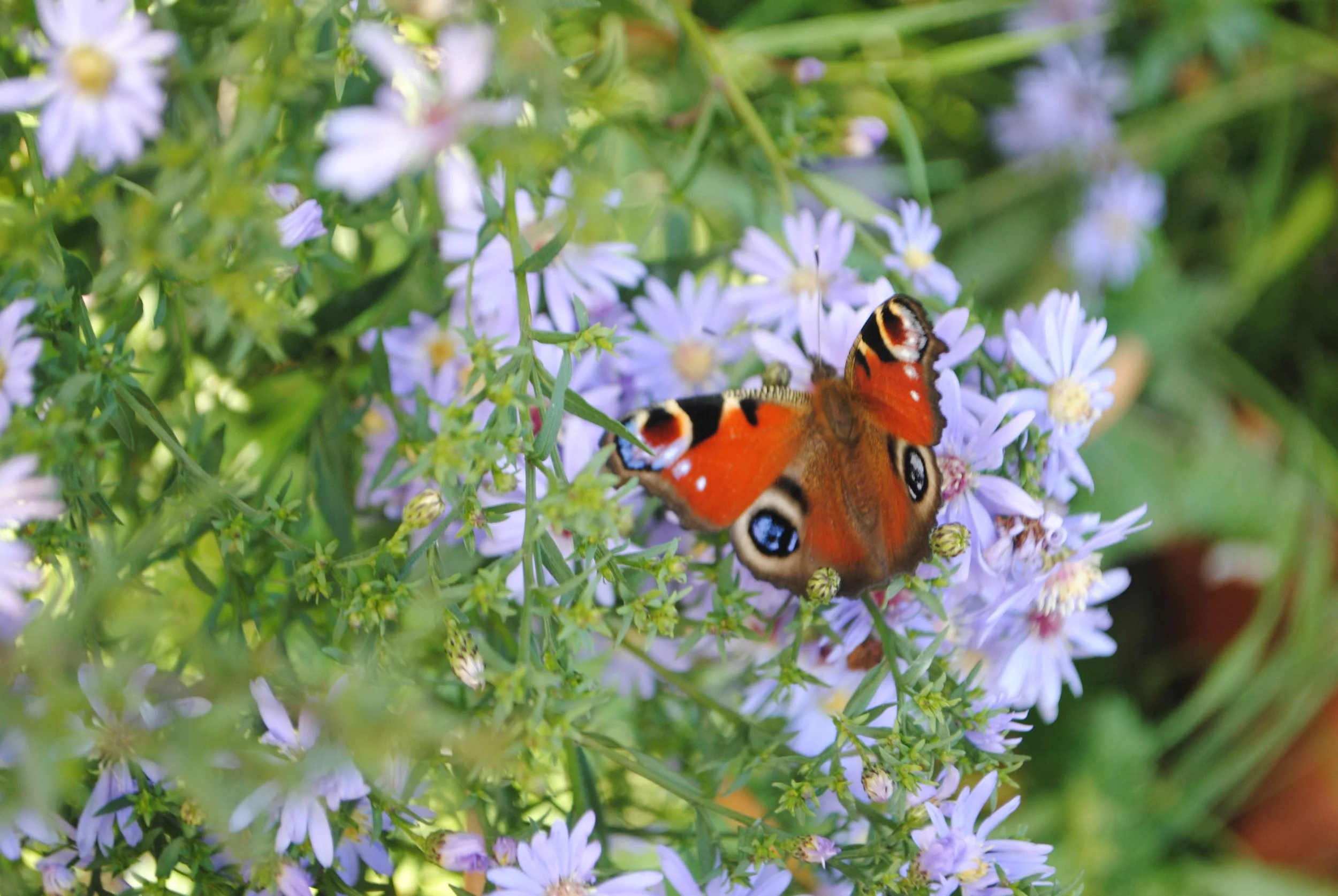
Peacock butterfly on a perennial aster
Its something I always had assumed, that nature was important for humans, but its not until I enter my fourth year of flower farming and my fifth year of living on a smallholding that I can say that I viscerally feel and know that that our connection to nature is vital for us.
Our plot when we moved in was already good for nature, luckily the previous owners had planted native trees, maintained the mature trees in their most wild and natural state and kept the grass long.
In the past 5 years we have worked hard to enhance that. Some of the things that we have done have had a huge positive impact on wildlife and I have condensed five years of learning and observations into this blog
Thistles - purposefully growing stands of thistles have been one of the simplest, but most impactful things that we have done. This summer we bore witness to what can only be described as clouds of butterflies, bees and pollinators on the huge stand of thistles that we have encouraged in our meadow. Thistles have been found to be one of the most important species of flowers for pollinators - think of them as a nutritional jackpot for pollinators.
There is excellent research on this by a group called the Pollinator Monitoring and Research Partnership (PMRP) that aims to establish how insect pollinator populations are changing across Great Britain see more on their website HERE
One of the things I noticed last summer, is that the thistles had so many more insects on them than the flowers I had grown on the farm even though they are so close to one another. Those flowers are good for wildlife but more like a trip to a sweet shop than a full nutritious meal.
Can you leave a small area of your plot or garden to thistles? A second best alternative is knapweed that too is an excellent food source for pollinators.
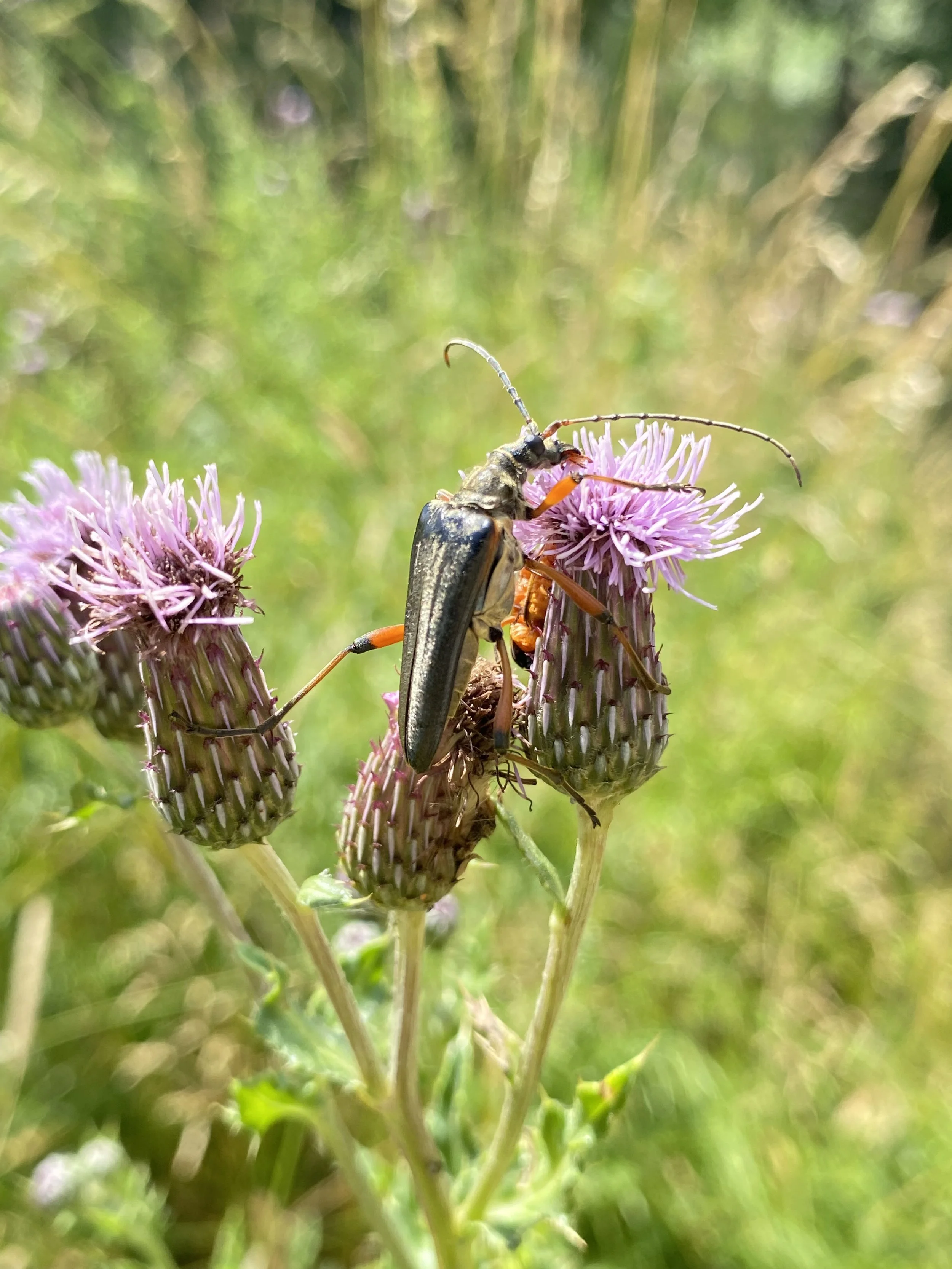
Longhorn Beetle on thistles
2. The next thing we have implemented, that I can see is having a great impact on wildlife, is leaving deadwood. We are achieving this in a couple of different ways:
living deadwood - allowing dying trees to remain in place and slowly break down.
Fallen deadwood. When a storm gifts us a tree or large branch only a third will be used for firewood. One third we leave as close to where it landed and that is left to gradually rot. Its incredible to see what fungi inhabit the logs first and then the different beetles that burrow into it. The final third is either chipped or added into a dead hedge.
Dead hedging - with the brash of fallen trees and an orchard on the farm a huge amount of material is generated. With fruit trees you need to prune the trees in order to maintain size and productivity every year. A dead hedge is the perfect place to tuck away the branches, creating another habitat for wildlife and a lovely feature. The trick to make these very visually appealing is to have almost all the material going in the same direction.
Wood chip - finally any branches we can’t use or put in a dead hedge gets chipped. This is then either put on paths, beds or into compost. Chipped wood makes really microbially diverse, fungal dominant compost.
So what does all the above do for wildlife? It creates new habitats and micro habitats within that. Rotting wood and chipped wood can really improve soil. And the increase in insects living in these habitats are a great food source for those creatures further up the food chain.
3. NOT USING CHEMICALS
If I could click my fingers I would immediately remove any chemicals from garden centres and the garden shelves in supermarkets. You don’t need them!
These chemicals are not only catastrophic for wildlife but also terrible for human health. Chemicals have only become standard in gardens and farming in the past 70 years.
Alternatives to chemicals include:
think of your garden or farm as its own ecosystem create space for wildlife to hibernate so they can exist on your plot. The ladybird population on our farm effectively manages our aphid problems.
build in that there will be pests and some loss - this is a natural cycle you can’t have flowers and no slugs.
grow healthy pest resistant plants by improving soil quality, making your own natural fertilisers and by prioritising this on your plot.
Keep ducks or chickens - if you have the space poultry is an amazing addition to a farm. They eat slugs, their poop is excellent fertiliser and the supply of fresh eggs is a great by product. And I’ve a great recipe to turn those eggs into a brilliant liquid fertiliser. I will share this on another post.
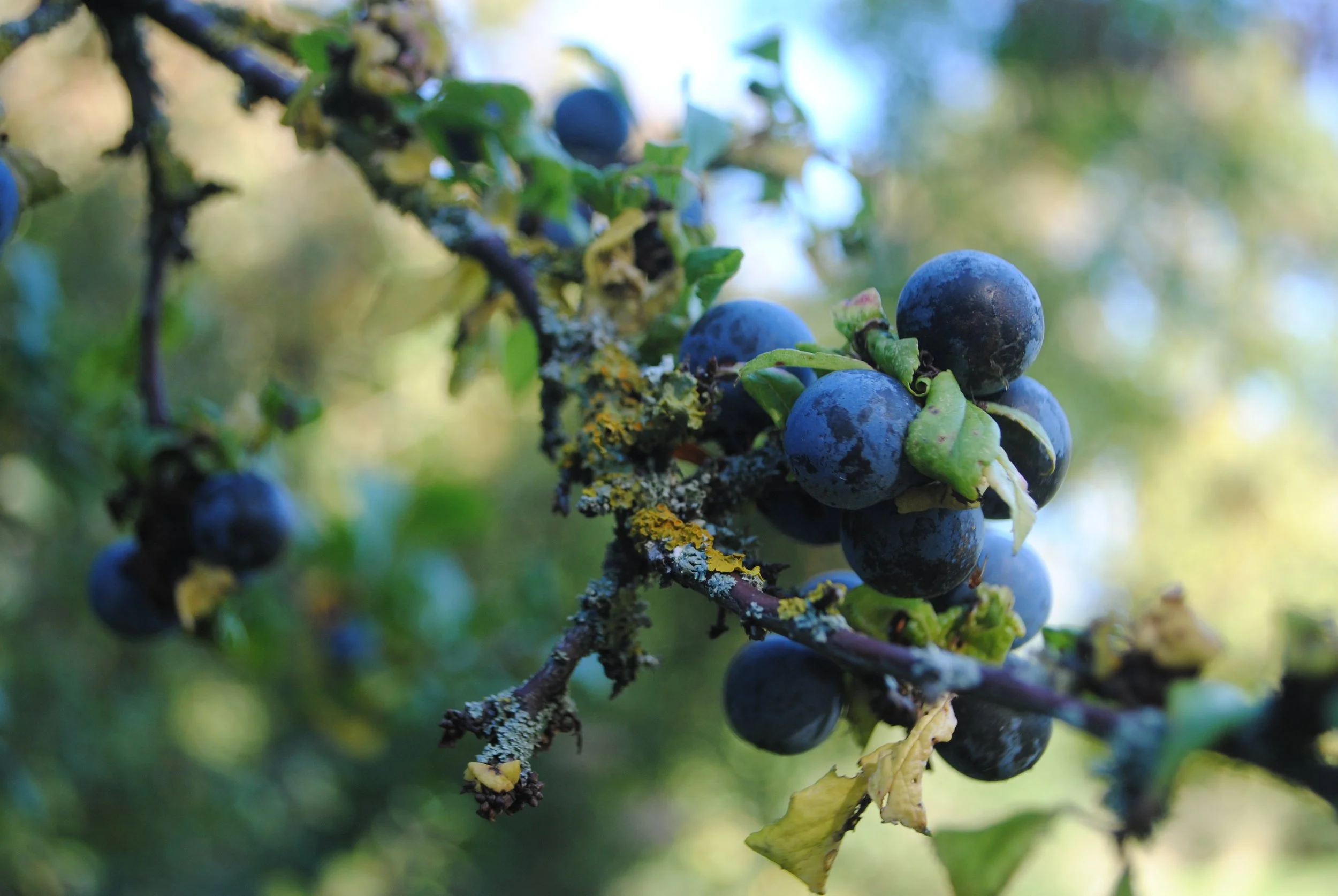
Blackthorn berries
4. Hedgerows
If you have the space a hedge is one of the most amazing spaces for wildlife. They can be a safe place for birds to nest or roost. If you can include lots of species with berries or fruit (hawthorn, blackthorn, damsons, elder, crab apple) they will not only have some of the earliest blossoms for pollinators but also the last food source for birds in the form of berries.
An excellent tip for enhancing your hedgerows even further is to encourage climbers to ramble up between any gaps. I can recommend ivy, dog rose, honeysuckle, wild clematis and hops.
There is nothing more wonderful than a sunny, late autumn day watching thousands of pollinators gorging on the ivy pollen. Its the very last chance for our native bees to have a big feed - helping build their winter stores.
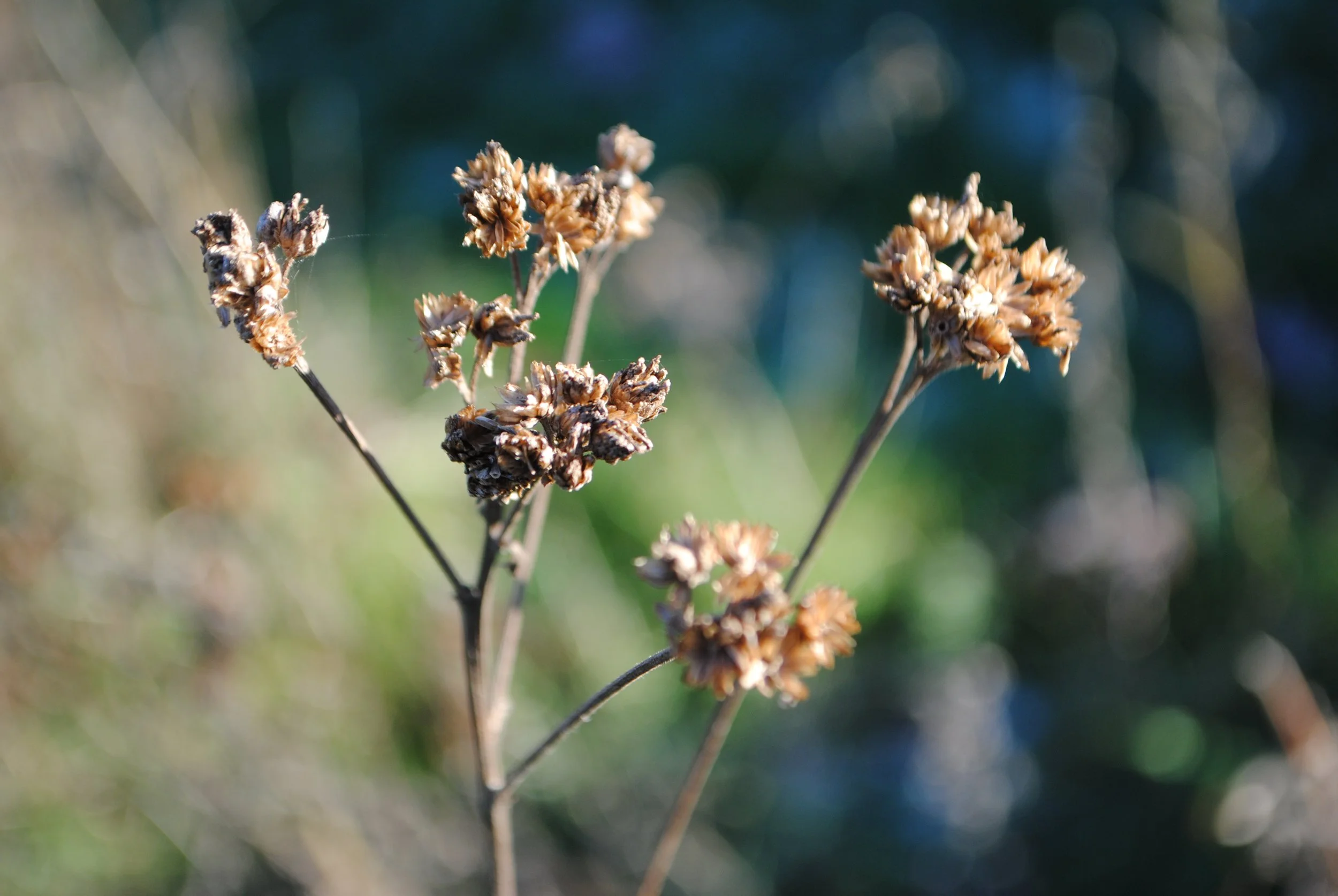
Dried achillea seed head
5. As much as it would be so easy and helpful to ‘Tidy’ all the beds in the winter months I don’t. And the reason for this is those decaying plants are exceptional places for wildlife to hibernate over winter. This is a vital habitat for them.
But there are also other benefits. Those dried seeds may fall to the floor and germinate and these free plants will be some of the healthiest and robust ones around. Why? Because those seeds are fully adapted to your plot and that seed has successfully competed with all the others to grow and its blinking happy to be there. I love a volunteer plant!
The decaying material will also form a mulch for your soil.
I know that a decaying plant is not the most desirable thing for a garden but what you do in winter will exponentially improve the space in the spring and summer months with healthy soils, more plants and more wildlife.
If this has been of interest to you please do let me know. If you would like more details on anything or a more specific blog on nature friendly farming techniques, pest management, home brewed fertilisers or compost then drop me an email.